









CO2
Footprint
44% reduced CO2 footprint
In the fall of 2021, we calculated the CO2 footprint of all BARONS shirts for the first time. Now we are ready with the overview for Generation 4.
In short: Your BARONS shirt's CO2 footprint has been reduced by 44%.
As one of the only brands in our industry, we lay all our cards on the table and show the CO2 footprint of each shirt in our collection. Our challenge to the rest of the industry: Show us your numbers

Earth Calls the Fashion Industry
It is estimated that the fashion industry is responsible for 10% of the annual global CO2 emissions. That's more than international flights and the shipping industry... Combined! (Source: EPRS and UN)
Reducing the CO2 footprint of BARONS shirts is not a clever idea that came out of the blue. Our entire existence is based on delivering a simple shirt concept with a fixed range of products that last longer and never go out of style. That's why we continue to refine even the smallest detail on the shirt that can help reduce the overall footprint.
We are not there yet. Our CO2 Footprint is just one of many concrete projects aimed at contributing to a greener wardrobe – and a greener industry.

How We Did It
The lifecycle of a shirt can be long and winding. Under the umbrella term carbon footprint, there are a number of factors that affect the overall calculation.
Our calculations are based on the production and transportation of the shirt until it reaches the customer (Cradle-to-customer).
Overall, the calculations cover materials and additional parts for the shirt as well as transportation. Furthermore, the calculations of the individual shirt model's carbon footprint are based on a weighted average depending on which models we produce the most.
You can find further information about calculations, assumptions, and data sources here.
Joachim Latocha, Founder
The Result
44% CO2 reduction
We have calculated the Generation 4 shirts' CO2 footprint to be between 2.9 - 3.9 kg/CO2e. The calculations are verified and prepared in collaboration with Danish Climaider, which calculates the climate footprint of products.
The difference between the four products is solely due to weight differences in the fabric types. For example, a The Founder weighs significantly more than a The Lawyer, which means a higher consumption of cotton.
We operate based on a "near-shore" production principle. This means that at every stage of the supply chain, we strive to keep production as close to the consumer as possible.
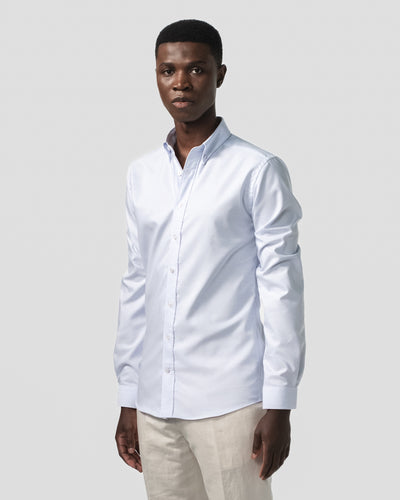
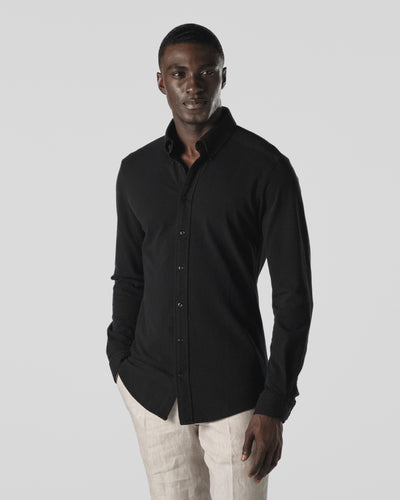
3,3 kg
3,3 kg
3,8 kg
3,8 kg
2,9 kg
2,9 kg
3,9 kg
3,9 kg

The Future
It will always require materials, processing, and transport to produce our shirts.
However, we can do a lot to reduce the shirt's footprint. In the future, we will focus further on optimizing the footprint of even the smallest components such as buttons, thread, and packaging. We will also continue to focus on increasing the share of renewable energy sources with our subcontractors.
The whole purpose of examining our Footprint is to gain insight into each shirt's CO2 footprint. This information enables us to reduce emissions in our future generations of shirts.
We do not yet have the perfect solution – but we have already reduced the average footprint of the shirt by 44% from Generation 3 to Generation 4.
Do you want to reduce your carbon footprint?
Of course. Therefore, here are our two specific suggestions on how you can reduce your footprint.

Wear the shirt until it is worn out
"The most sustainable shirt is the one you wear out. And to be completely honest, you don't wear out a floral print shirt, even if it's the height of fashion for a few months. However, you do with the classic shirt.”
- Joachim Latocha, Founder.
Read the full article here.

Extend the shirt's lifespan
Follow our washing instructions, i.e., low washing temperature, low spin cycle, and skip the dryer.
Did you know, by the way, that fabric softeners have no measurable effect on the softness of your clothes? (Source: Miljøstyrelsen). Therefore, we also recommend that you skip the fabric softener when washing your BARONS shirts.
Visit our Care Guide for more great tips on how to extend the life of your shirts.
Whitepaper
Climaider has created the following article about the collaboration and calculations.
We encourage all other brands in the textile industry to follow suit and also openly display the CO2 footprint of the clothing they produce. For the sake of consumers.


